





HOW TO MASTER THE PAST WITHIN: A COMPLETE COOPERATIVE PUZZLE GUIDE
The Past Within represents a breakthrough for Rusty Lake in the puzzle genre, thrusting players into a hauntingly asymmetric cooperative experience. Unlike previous installments, this game requires two players to maintain constant communication to bridge two dimensions: The Past and The Future. One player witnesses what has already occurred, while the other manipulates high-tech machinery to alter the destiny of the Vanderboom bloodline. Mastering this game lies not just in puzzle-solving logic but in the ability to transmit information accurately and efficiently between two traveling companions.
How can two players synchronize their actions when they cannot see each other's screens? This guide will instruct you on every aspect from initial setup and describing cryptic symbols to advanced tactics for completing both chapters of the game. We will explore the detailed roadmap to decoding the darkest mysteries of Albert Vanderboom and how to operate this mystical time machine. Prepare your mind, for the truth about resurrection awaits you at both ends of the timeline.
1. HOW TO SET UP: PREPARING FOR THE OPTIMAL CO-OP EXPERIENCE
To begin your journey in The Past Within, the prerequisite is a reliable partner. Since the game does not feature an automatic online matchmaking system, you need to use voice communication apps like Discord, Zoom, or simply sit in the same room (but back-to-back). Ensure both of you have the game installed and have selected the correct version (The Past or The Future). A vital tip is to choose the same "icon" (Bee or Butterfly) at the start screen to ensure your puzzle solutions match.
After establishing contact, the first task is to check audio and latency. In The Past Within, there are puzzles involving rhythm and sound, so a stable connection is key. Agree upon a naming convention for directions (Up, Down, Left, Right) and basic shapes. Establishing a "common language" from the start will minimize confusion when you face complex Vanderboom symbols in the coming minutes.
2. HOW TO COMMUNICATE: THE ART OF DESCRIBING SYMBOLS AND IMAGERY
Communication is the most powerful tool in The Past Within. The Future player will often manipulate a complex mechanical device, while the Past player faces a classic room filled with strange objects. When one player sees a sequence of symbols, instead of guessing their names, describe them using the most evocative words possible. For example: "a triangle with a horizontal line," "an incomplete circle," or "a rectangle containing a dot."
Don't just talk—listen actively. When your teammate is describing a process, confirm it by repeating the information. "I see three red bars, do you have a similar button?" is a smart way to ask. Remember, in this game, one person's information is the other person's key. Training your ability to describe images concisely will help you bypass speed-based puzzles with ease.
Tips for Effective Visual Description
Use comparison rules to make it easier for your teammate to visualize.
- Clock Rule: Use clock hand positions (e.g., "the button at 3 o'clock").
- Geometric Rule: Break down complex symbols into simple shapes (circle, square, triangle).
- Color Rule: Always prioritize mentioning the color before describing the shape.
3. HOW TO SOLVE CHAPTER 1: CONNECTING WITH THE MYSTERIOUS BOX
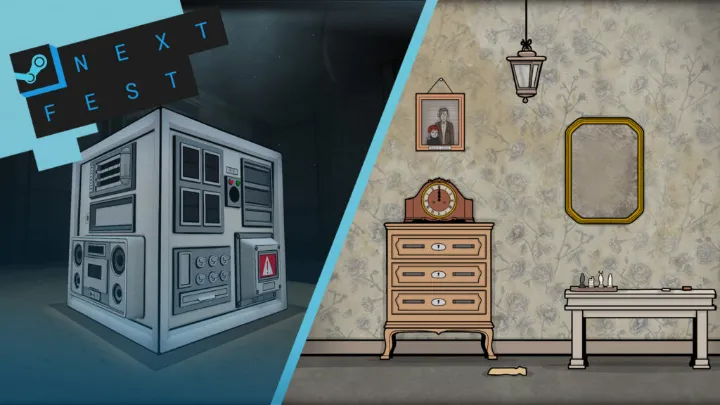
In Chapter 1, the Future player operates on a mysterious metal box, while the Past player explores Albert’s room. How do you open the first drawers? The Past player needs to search for notes or calendars to provide specific dates for the Future player to input into the device. Pay close attention to small details like the position of paintings or letters scribbled on the walls, as they are often codes for the switches on the box.
One of the greatest challenges of Chapter 1 is conveying wiring diagrams or button positions. When the Future player changes a setting on the box, it often causes a physical change in the Past player's room. Always ask each other: "Do you see anything that just changed?". Smooth coordination between observing the room and manipulating the device will help you extract necessary samples like Albert's teeth, blood, and marrow to prepare for the resurrection.
4. HOW TO USE ITEMS: INTERACTING ACROSS DIMENSIONS
The item system in The Past Within is unique because items often appear as "reflections." An item obtained in the Past may provide a clue to open a corresponding device in the Future. For instance, if you find a key in the Past, notify your teammate immediately so they can check if any drawer in the Future has suddenly gained a keyhole. Never keep information to yourself, even if it is just a small number etched on a spoon.
Key Item Categories to Note
Managing and using items correctly will determine your completion speed.
- Codes: Usually sequences of numbers or characters on paper or computer screens.
- Mechanical Parts: Gears, fuses, and batteries used to power the time machine.
- Biological Samples: Teeth, blood, and body parts required for the ritual.
5. HOW TO SOLVE CHAPTER 2: OPERATING THE RESURRECTION MACHINE
Chapter 2 pushes the difficulty higher as the box in the Future turns into a room, and the room in the Past turns into a small box. This is a fascinating spatial swap. To solve puzzles in this chapter, you must be extremely sensitive to sounds and rhythms. The Future player will often control an artificial brain, while the Past player must perform physical actions on Albert's body.
How do you synchronize heartbeats or electrical pulses? Use the "1-2-3-Click" counting method. Counting together helps both players perform actions at the exact same moment, which the game often requires during climax segments. Chapter 2 also demands better 3D spatial observation, as you will describe the position of objects inside a cube to someone standing outside that room.
6. HOW TO HANDLE TIME PUZZLES: SYNCHRONIZING THE CLOCKS
Clocks are always a core symbol in Rusty Lake games. In The Past Within, setting the time is one of the most difficult tasks. Usually, one person sees the time on a broken wall clock, and the other must rotate clock hands on another device to match it. The tip here is to state the exact position of the hour and minute hands rather than just the number (e.g., "The minute hand is at 6, the hour hand is slightly past 2").
Solving clock puzzles often triggers vital cutscenes or completely changes the room's lighting. Note that in-game time does not follow real-time but follows puzzle logic. Once you have set the correct time, be ready for supernatural phenomena to occur immediately. Time synchronization between Past and Future is the final key to connecting Albert Vanderboom’s soul.
7. HOW TO COPE WITH HORROR ELEMENTS: STAYING CALM IN THE DARK
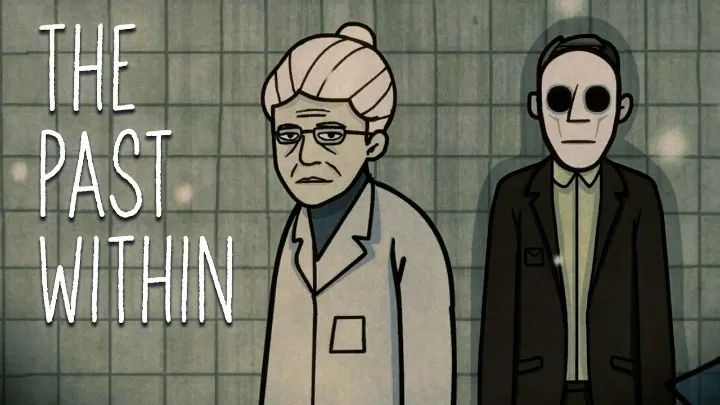
Despite being a puzzle game, The Past Within carries the heavy spiritual horror atmosphere of Rusty Lake. There will be times when your screen is covered in shadows or eerie entities appear abruptly. The tip to getting through is not to panic. Continue describing what you see to your teammate, as sometimes the appearance of ghosts is a hint for a certain code. The player in the other dimension is usually the one with the solution to dispel these entities.
If you feel too overwhelmed, communicate with your partner to take a short break. The connection between two people is not just for solving puzzles but for reassuring each other. Knowing that another person is experiencing the same sensation on the other side of time will make you braver in performing "gruesome" tasks like sawing bone or extracting marrow. Remember, everything is an illusion designed to test your persistence.
8. HOW TO SWAP ROLES: FULLY EXPERIENCING BOTH DIMENSIONS
After completing the game once, do not stop there. One of the best features of The Past Within is replaying with reversed roles. If you played the Past, try the Future, and vice versa. This not only helps you understand the logic of the entire game but also makes you appreciate your teammate's efforts from the previous run. You will realize: "Ah, so that's why they described it that way!"
When swapping roles, try choosing the other icon (Bee or Butterfly) to face different solutions. The game has high replay value due to the perspective shift between two people. Role-swapping is also the best way to train communication skills from both sides, helping you become a perfect puzzle-solving duo for other co-op games in the future.
9. HOW TO OPTIMIZE SPEED: STRATEGIES FOR A SPEEDRUN
For those who want to challenge themselves by finishing the game as fast as possible, the secret lies in memorizing interaction points. Instead of describing everything from scratch, use concise keywords agreed upon beforehand. For example, instead of saying "The red button on the bottom left of the box," just say "Button 4." Minimizing language will significantly reduce communication time.
Speed Optimization Checklist
Thorough preparation will help you shave off dozens of minutes of redundant time.
- Pre-note Codes: Some codes do not change between playthroughs.
- Task Division: Know in advance who will perform the primary mouse movements.
- Skip Dialogue: Fast-click through hint texts you already know.

10. HOW TO DISCOVER SECRETS: SEARCHING FOR EASTER EGGS
Rusty Lake always hides Easter Eggs related to their other games within the universe. To find them, you must observe wall paintings or small objects deep in cupboard corners very carefully. Sometimes, entering a code from another Rusty Lake game into the computer in the Future dimension will unlock fascinating secrets about the Vanderboom family and the appearance of Mr. Crow or Mr. Owl.
Don't hesitate to experiment with "pointless" actions like clicking repeatedly on a mirror or a clock. The Past Within encourages curiosity and the ability to connect data from the entire series. Finding Easter Eggs not only brings Achievements but also helps you dive deeper into the dark and mesmerizing lore that the developer has painstakingly built over many years.
CONCLUSION
How to conquer The Past Within ultimately comes down to one single factor: the understanding between two players. This game is not just a test of intelligence but a lesson in trust and coordination. When you and your partner press the final button together, the satisfaction comes not just from solving the puzzles, but from having overcome the barriers of space and time to achieve a common goal.
Whether you choose the Past or the Future, always cherish every moment of communication and the laughter (or screams) throughout the process. The Past Within is proof of how vivid and connecting a puzzle game can be. We hope this guide has provided the necessary tools to begin your journey. Enjoy your puzzle-solving experience and discover every secret hidden within Albert Vanderboom’s box!
The Past Within Guide: How to set up co-op, effective communication tips, puzzle strategies between Past and Future, and secrets to conquering the Vanderboom family.