.webp)




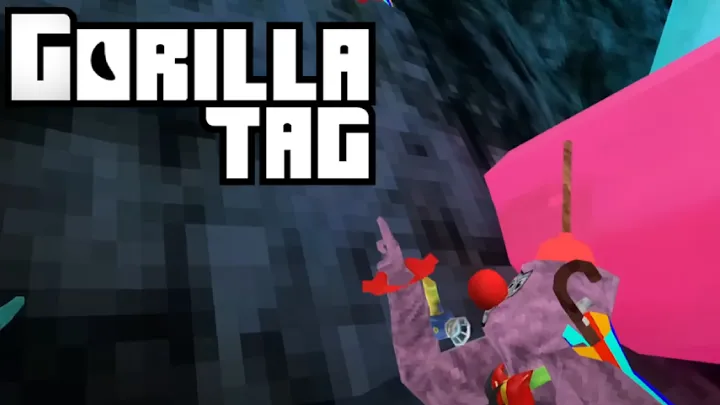
Gorilla Tag proves that a game does not need advanced graphics, complex systems, or long tutorials to succeed. Instead, it relies on minimal design, physical movement, and social interaction. This article explains how simplicity became the core strength of Gorilla Tag and why it continues to attract millions of VR players.
1. The Power of Minimal Rules
Gorilla Tag has very few rules. Players only need to understand movement and tagging.
Fewer rules mean faster immersion.
Minimal Rule System
- Move
- Chase
- Escape
Design Advantage
Less learning, more playing.
2. Why Simple Mechanics Feel More Real
Using arms instead of buttons creates a natural connection between player and game.
Real movement feels intuitive.
Physical Interaction
Body replaces controller.
Immersion Effect
Players feel physically present.
3. No Tutorials, No Instructions, No Barriers
Most games explain everything. Gorilla Tag explains almost nothing.
Players learn by doing.
Learning Method
- Observation
- Experimentation
Discovery Fun
Learning becomes part of gameplay.
4. How Simplicity Increases Skill Depth
Simple mechanics do not mean shallow gameplay.
In fact, simplicity allows deeper mastery.
Skill Layers
- Basic movement
- Advanced momentum
- Tactical positioning
Hidden Complexity
Depth emerges over time.
5. Map Design Built Around Movement
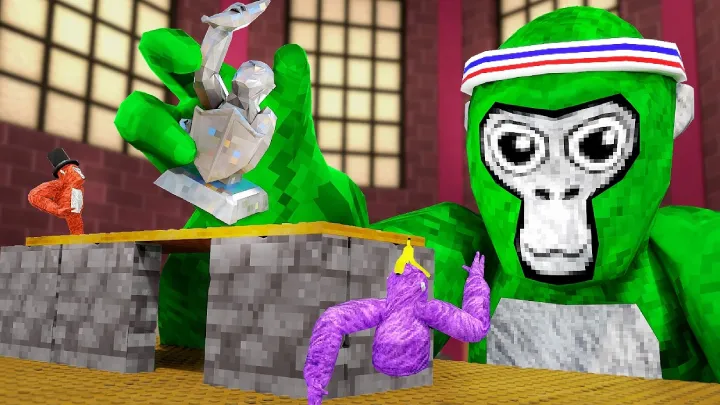
Maps in Gorilla Tag are designed to support climbing, jumping, and swinging.
Environment becomes a tool.
Map Elements
- Walls
- Trees
- Slopes
Design Logic
Every surface is playable.
6. Why Players Feel Constant Freedom
Without quests or missions, players choose their own goals.
Freedom increases engagement.
Player Freedom
- Explore
- Chase
- Socialize
Emotional Impact
No pressure, only play.
7. Social Chaos as Core Content
Players create unpredictable situations.
Human behavior becomes the main content.
Social Dynamics
- Cooperation
- Competition
Replay Value
Every match feels new.
8. No Progression System, Yet High Motivation
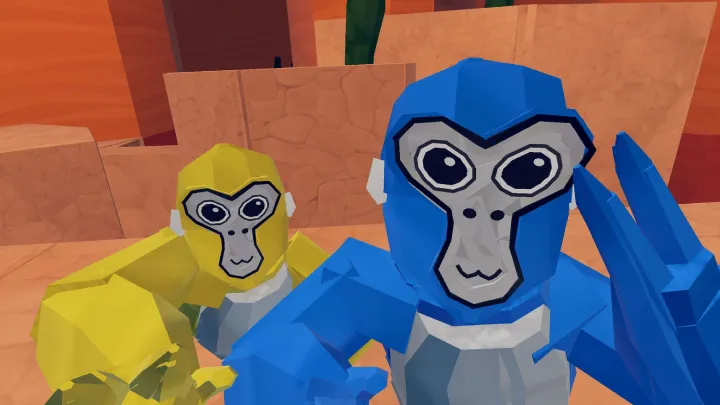
There are no levels, stats, or upgrades.
Still, players feel motivated to improve.
Motivation Sources
- Skill improvement
- Social recognition
Intrinsic Reward
Progress feels personal.
9. Why Gorilla Tag Feels More Like Play Than Gaming
The game feels closer to playground games than traditional video games.
It taps into childhood instincts.
Playful Elements
- Tag
- Hide and seek
Emotional Nostalgia
Pure fun over systems.
10. Gorilla Tag’s Lesson for Future Game Developers
Gorilla Tag teaches an important lesson: complexity is not always necessary.
Sometimes, less design creates more engagement.
Key Design Lessons
- Focus on core interaction
- Remove unnecessary systems
Industry Insight
Simplicity can outperform realism.
Conclusion
Gorilla Tag succeeds because it strips gaming down to its most basic elements: movement, interaction, and fun. By avoiding complex mechanics and focusing on physical play and social chaos, it creates an experience that feels natural, immersive, and endlessly replayable. Its success shows that in VR, simplicity is not a weakness—it is the ultimate strength.