
Carry The Glass: Essential Tips & Guides for Better Teamwork, Safer Carrying, and Faster Completion
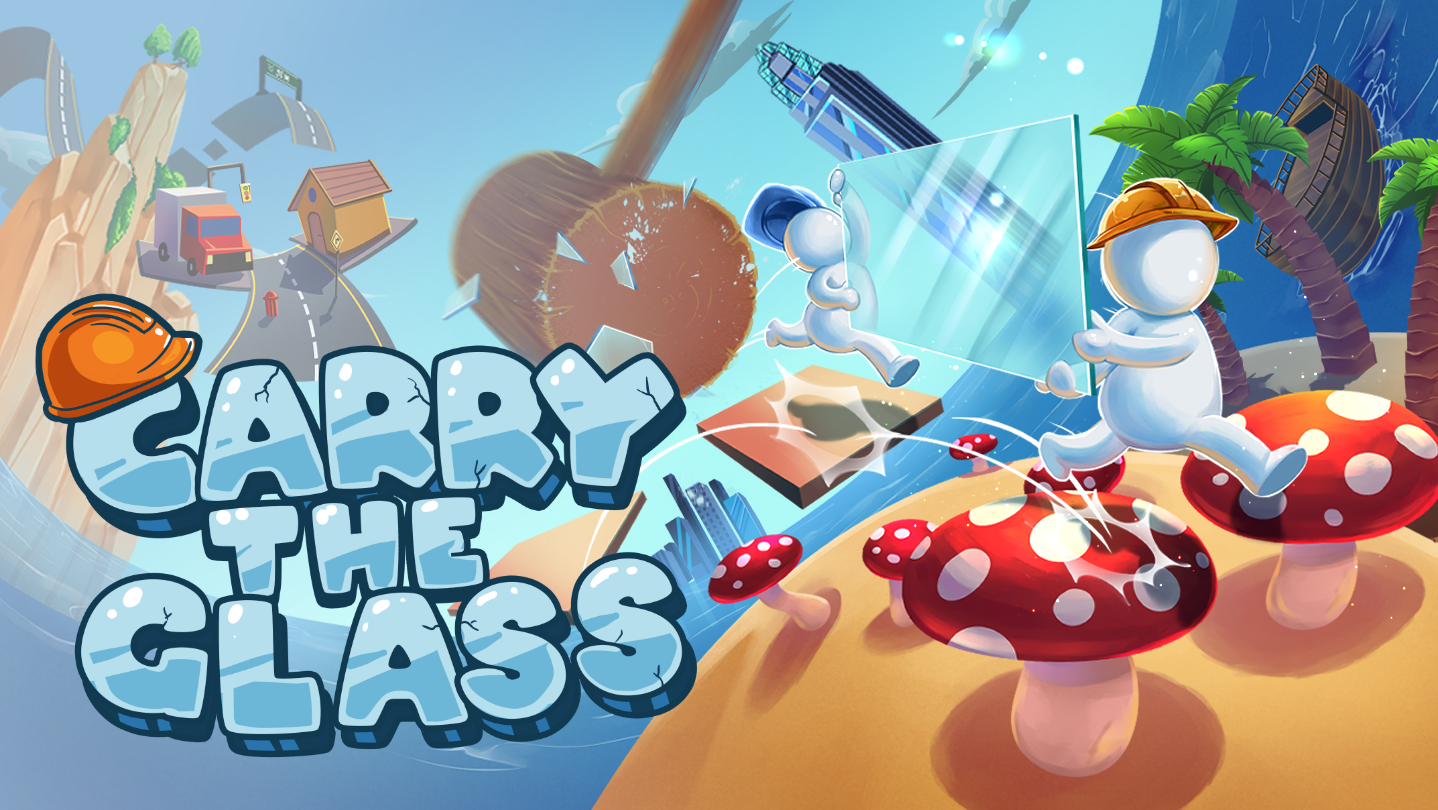
Carry The Glass: Essential Tips & Guides for Better Teamwork, Safer Carrying, and Faster Completion
Carry The Glass is a cooperative physics-based game where two players work together to transport a fragile glass pane through obstacle-filled environments. Although the objective appears simple, completing a level requires much more than walking toward the finish line. Players must coordinate their movements, maintain control of the glass, react to changing terrain, and avoid collisions that can ruin an entire attempt. The challenge becomes even greater when narrow passages, elevated platforms, moving obstacles, and boss encounters demand precise timing.
The most effective way to improve in Carry The Glass is to develop reliable habits rather than depend on luck. Understanding how the carrying mechanics work, communicating with your partner, choosing the right movement speed, and learning from failed attempts can make a major difference. This Tip & Guides article brings together practical strategies for beginners and experienced players, covering everything from the first moments of a run to advanced obstacle management, level progression, achievements, and competitive races. Each tip focuses on a specific part of the experience so you can build better teamwork and complete more difficult challenges with confidence.

1. Prepare Your Team Before Starting a Level
A successful run begins before the first obstacle appears. Carry The Glass is designed around cooperation, so choosing a partner who communicates and responds consistently is just as important as understanding the controls. Two players may have excellent individual movement skills, but if they make decisions independently, the glass can become unstable. Before starting, agree on who will lead movement decisions and how you will communicate when approaching difficult sections.
For beginners, Normal difficulty is the best place to learn the basic mechanics and level layouts. It provides a more forgiving experience than Hard or Impossible, where mistakes become increasingly costly because of fewer or no checkpoints. Do not choose a difficult setting simply because you want to finish quickly. Learning the movement system on an accessible difficulty will help both players develop the coordination needed for more demanding attempts.
Choose a suitable difficulty
- Normal: Best for learning basic controls, obstacle patterns, and teamwork.
- Hard: Suitable for players who already understand the route and can avoid common mistakes.
- Impossible: A serious challenge for experienced teams that can complete a level without checkpoint support.
- 2v2 Glass Race: A competitive option for teams that want to test their completion speed against another pair.
Establish a communication system
Before moving, agree on a few simple commands. For example, one player can say “Go” when both are ready, “Stop” when the glass becomes unstable, and “Wait” when an obstacle requires observation. Short commands are easier to understand than long explanations during a difficult sequence.
The player who leads should not move without checking the other carrier's position. Likewise, the follower should communicate immediately when their side needs an adjustment. The goal is to make decisions together, even if one person takes responsibility for calling the next action.
2. Master the Basic Glass-Carrying Mechanics
The glass is the most important object in Carry The Glass, and understanding how it responds to movement is essential. Both players contribute to transporting the pane, meaning that one person's movement can affect the other's position and the overall stability of the object. Players should not assume that the glass will automatically remain aligned simply because both characters are moving forward. Differences in direction, speed, and distance can create problems that become difficult to correct near obstacles.
The independent glass-control improvements introduced in the 2.0 update give each player more control over their own side of the pane. Players can lift and manage their respective sides independently, while the push-and-pull mechanic responds to the distance between them. These mechanics create more possibilities for precise movement, but they also require greater awareness. A player who changes their side without warning may create an unexpected angle or force their partner to reposition.
Practice before entering dangerous areas
Spend a little time on open ground testing how the glass responds. Walk forward together, stop at the same time, and try small directional adjustments. Pay attention to what happens when one player moves faster or changes position.
A useful practice routine includes:
- Pick up the glass and establish a comfortable carrying position.
- Walk forward slowly while maintaining the same general pace.
- Stop together and observe the pane's position.
- Practice turning in both directions.
- Test small independent lifting adjustments.
- Return to a stable position before continuing.
Avoid unnecessary corrections
One common beginner mistake is constantly adjusting the glass even when there is no obstacle nearby. Too many changes make movement unpredictable and increase the chance of an accidental collision. If the pane is already positioned correctly, leave it alone and focus on the route ahead.
The best players understand that control is not about making the greatest number of adjustments. It is about making the right adjustment at the right moment.
3. Maintain Balance, Spacing, and Movement Speed
Maintaining a consistent distance between the two players is one of the most useful habits in the game. If one carrier moves too far ahead, the other may be pulled or pushed depending on the distance between them. This can make the glass harder to control, especially when approaching a narrow passage or a platform with limited space. Players should therefore treat their relative positions as part of the carrying challenge rather than focusing exclusively on their own characters.
Speed is equally important. Walking too slowly can make some sections unnecessarily difficult, but moving too quickly can cause the pair to lose alignment. Beginners should prioritize a steady pace that both players can maintain. Once the team becomes familiar with the route, it can gradually increase speed without sacrificing control.
Tips for maintaining proper spacing
- Move at a pace that both players can comfortably follow.
- Stop if one carrier falls noticeably behind.
- Avoid sudden attempts to catch up.
- Keep enough room to make small corrections.
- Recheck the glass position after every major turn.
- Do not move in opposite directions unless the maneuver requires it.
How to recover from uneven movement
If one player gets ahead, stop rather than continuing forward. Allow the other carrier to restore a comfortable position before moving again. Trying to fix the distance while both players are still walking can create additional instability.
Use the stop-and-reset technique
- Stop both characters.
- Check which player is too far ahead or behind.
- Make a small position correction.
- Confirm that the glass is stable.
- Continue at a shared pace.
This simple technique is particularly effective before difficult obstacles. A few seconds spent restoring balance can prevent a collision that would cost much more time.
4. Use Independent Lifting to Handle Difficult Angles
Independent lifting is useful when the route requires the glass to be carried at a different angle. Each player can control their own side, allowing the pair to make deliberate adjustments rather than relying on one fixed carrying position. This becomes important around obstacles that restrict the available height or orientation of the pane. However, independent control should always be coordinated because raising one side while leaving the other unchanged creates a tilt.
The safest approach is to stop before making a significant adjustment. Communicate which side needs to move, raise or lower it gradually, and check the result before continuing. If the team attempts to change the angle while walking through a narrow area, it may become difficult to identify the cause of an unexpected collision.
When should you adjust the glass?
Consider changing the angle when:
- An obstacle limits the available vertical space.
- The current orientation makes a passage difficult to enter.
- A platform transition requires more careful positioning.
- The glass needs to be realigned after a turn.
- Both players agree that the adjustment will improve clearance.
Common lifting mistakes
Lifting too much: A large adjustment may create a more difficult angle than the original position.
Changing sides without warning: The other player may not be prepared for the new orientation.
Adjusting while moving: Simultaneous movement and lifting can make the glass harder to control.
Forgetting to stabilize: Players may continue walking before the pane has settled into the intended position.
The key tip is to make small, purposeful changes. Once the glass reaches the correct angle, maintain that position until the obstacle has been cleared.
5. Navigate Narrow Passages and Tight Corners Safely
Narrow passages are among the most common sources of avoidable mistakes. A character may fit through an opening while the glass does not. This means players must consider the dimensions and orientation of the entire pane instead of judging clearance from their characters' positions alone. A passage that looks safe from the front may still cause the rear edge of the glass to collide with a wall or structure.
The best method is to approach slowly, stop before entering, and check the available space. Both players should understand how the glass will pass through the opening. If a small adjustment is needed, make it while stationary. Once the team begins crossing, avoid sudden turns or unnecessary changes in height until the entire pane has cleared the obstacle.
The three-step passage strategy
Step 1: Approach carefully. Move toward the opening together and stop at a safe distance. Do not stand so close that there is no room to correct the angle.
Step 2: Align the pane. Check the direction and position of the glass. Make a small adjustment if necessary, then confirm that both players are ready.
Step 3: Cross slowly. Move at a consistent pace and pay attention to the rear edge. Do not turn immediately after the front of the glass passes through.
Tips for tight corners
Corners require players to think about the movement of the entire object. If one carrier turns too early, the glass may swing into the surrounding structure. Instead, make the turn gradually and allow the other player to follow the same movement.
A useful rule is to complete one movement before starting another. Do not combine a sharp turn, a large height adjustment, and a sudden change of speed unless the obstacle absolutely requires it. Keeping movements separate makes the result easier to predict.
6. Improve Your Timing Around Jumps and Moving Obstacles
Jumping while carrying the glass requires both players to coordinate their actions. If one person jumps earlier than the other, the pair may lose their stable position. This is particularly dangerous near narrow platforms or gaps where there is little room to recover. Before jumping, move to a safe starting point, stop, and confirm that both players are ready.
Use a countdown or a clear command to synchronize the movement. After landing, pause briefly to check that both characters have regained a comfortable position. Do not immediately rush toward the next obstacle. The landing may have changed the distance between the carriers, and a short pause allows the team to correct it.
How to perform a coordinated jump
- Approach the edge together.
- Stop at a safe starting position.
- Check that both players face the correct direction.
- Count down before jumping.
- Perform the jump together.
- Stop after landing and restore stable spacing.
Watch moving obstacles before crossing
Moving obstacles require patience and observation. Instead of rushing toward the first visible opening, watch the hazard long enough to understand its movement pattern. Identify when the route becomes safe and whether the entire pane can pass through before the obstacle changes position.
One player can watch the hazard while the other checks the glass's position. Once both are ready, the leader can call the movement. If the safe window disappears or the timing becomes uncertain, wait for another opportunity.
A useful timing rule
Never begin a difficult crossing just because the front of the glass has enough space. The entire pane must be able to pass through safely. This is especially important when dealing with moving platforms, rotating obstacles, and sections where the environment changes during the crossing.

7. Explore Skyscraper and Lighthouse With a Clear Strategy
Carry The Glass offers different environments that test the team's ability to apply the same basic mechanics in new situations. Skyscraper is a good place to develop general carrying skills, while Lighthouse adds more demanding platforming challenges and the Crab Boss encounter. Rather than treating both levels as simple paths to the finish, players should learn each section and identify the movement techniques that work best.
When exploring Skyscraper, focus on maintaining a stable carrying position and navigating construction-themed obstacles without unnecessary corrections. Pay particular attention to narrow spaces and transitions between platforms. If a section causes repeated failures, stop and identify whether the problem comes from the glass angle, the players' spacing, or the timing of a movement.
Skyscraper tips
- Learn the route before attempting a fast completion.
- Keep the pane aligned when approaching tight spaces.
- Avoid rushing through platform transitions.
- Use open areas to restore a comfortable carrying position.
- Practice difficult sections until both players can complete them consistently.
Lighthouse tips
Lighthouse introduces additional platforming challenges and the Crab Boss. The most important strategy is to observe each encounter before committing to movement. Do not assume that the same pace and positioning used in Skyscraper will work everywhere. The team may need to adjust its approach depending on the available space and the behavior of the obstacles.
For the Crab Boss, prioritize understanding the encounter and communicating clearly. Watch for opportunities to move safely, avoid making unnecessary glass adjustments during dangerous moments, and coordinate any required repositioning. If the encounter causes repeated failures, review the sequence instead of rushing into another attempt without a plan.
8. Master Frosty, Collect Golden Keys, and Handle Special Challenges
Frosty, introduced in the 3.0 update, adds a snowy environment with several distinctive activities. These include three golden keys, sinking lily pads, a ski lift, a 9 Color game, and the Snowball Boss. The variety makes Frosty different from the earlier levels because players must respond to more than ordinary platforming obstacles. Environmental awareness and careful route planning become especially important.
The first useful tip is to avoid focusing on only one objective at a time. While collecting golden keys is important for opening the arctic base, the team must still maintain control of the glass. Before entering a new area, identify the objective, check the route, and decide how to approach it without creating unnecessary risks. Communicate when one player notices an important environmental detail so that both carriers can prepare.
Golden key tips
- Explore each section carefully instead of rushing past possible objectives.
- Keep track of which keys have already been collected.
- Plan the route to each key before entering a dangerous area.
- Maintain a stable carrying position while moving between objectives.
Sinking lily pad tips
Sinking lily pads require careful timing. Discuss the next movement before stepping onto a temporary surface. Both players should be ready to cross rather than stopping midway to decide what to do. If the team is uncertain about the timing, observe the sequence first and then attempt the crossing together.
Ski lift and 9 Color tips
The ski lift and 9 Color game introduce additional challenges that require players to pay attention to the environment and understand the sequence before acting. Avoid unnecessary movement while waiting for a cue. Make sure both players know when to proceed, and communicate if one person sees something the other may have missed.
Snowball Boss tips
Treat the Snowball Boss as a major encounter rather than an ordinary obstacle. Observe the encounter, identify safe opportunities, and coordinate movement before reacting to hazards. Avoid making large glass adjustments while under pressure. A controlled approach gives both players more time to respond and helps prevent panic-driven mistakes.
9. Use Checkpoints, Achievements, and Practice to Improve
Checkpoints are useful learning tools because they allow players to make progress without restarting an entire level after every mistake. Normal difficulty is suitable for learning the route, while Hard and Impossible demand greater consistency. The reduced checkpoint support on higher difficulties makes preparation especially important. Before choosing a more demanding setting, make sure both players understand the main obstacles and can complete difficult sections reliably.
When a run fails, do not immediately repeat the same movement. Take a moment to identify the cause. Was the glass too tilted? Did one player move too far ahead? Did the team begin crossing before the obstacle was clear? Did the rear edge collide after the front had already passed? Identifying the exact problem makes the next attempt more useful.
Create a practical improvement routine
- Identify the obstacle that caused the failure.
- Describe what happened immediately before the collision.
- Decide whether the problem involved spacing, angle, speed, or timing.
- Change one part of the strategy.
- Retry the same section.
- Keep the adjustment if it produces a better result.
Work toward achievements gradually
Achievements and leaderboards provide additional reasons to replay levels. Some objectives involve completing levels under particular conditions, improving completion times, finding hidden items, or taking on specific challenges. Instead of trying to accomplish everything during one run, divide your goals.
For example, use one attempt to complete the level safely, another to explore for collectibles, and another to improve your time. This prevents competing objectives from distracting you during difficult sections.
Improve speed without sacrificing control
Speed should come from better movement decisions rather than constant rushing. Once you understand the route, remove unnecessary pauses and improve transitions between obstacles. Do not skip important alignment checks simply to save a few seconds. A fast run that ends in a broken pane is rarely better than a slightly slower attempt that reaches the finish successfully.
10. Win More 2v2 Glass Races With Better Teamwork
The 2v2 Glass Race mode, introduced in the 3.0 update, allows two pairs to compete on the same course. The rival team appears as a ghost, so the competition focuses on finishing speed rather than direct physical interference. This mode tests whether players can apply their cooperative skills under pressure. A team that moves quickly but fails to coordinate may lose valuable time through repeated mistakes.
The best way to prepare for a race is to learn the course in regular cooperative play first. Identify the obstacles that slow your team down and practice the most difficult transitions. Once you know the route, decide where you can safely improve your pace. Avoid taking unnecessary risks just because the other team appears to be ahead.
Competitive tips
- Learn the course before attempting to set a fast time.
- Maintain clear communication even when racing.
- Move promptly when both players are ready.
- Avoid risky shortcuts that can cause collisions.
- Practice difficult sections separately.
- Focus on reducing mistakes rather than rushing every movement.
Build a reliable racing routine
Start with a stable opening, move through familiar sections at a consistent pace, and slow down when the course demands precision. The team should know which player will call jumps, turns, and obstacle crossings. If something goes wrong, communicate immediately instead of allowing frustration to disrupt the rest of the run.
The most successful teams are not always the ones that make the fastest individual movements. They are the teams that work together smoothly, make fewer corrections, and avoid unnecessary failures. Once coordination becomes natural, speed improves without requiring reckless decisions.

Conclusion: Build Better Habits and Become a More Reliable Glass-Carrying Team
Improving in Carry The Glass is about combining several skills into one consistent approach. Start by choosing a suitable difficulty and communicating with your partner. Learn how the glass responds to movement, maintain a comfortable distance, and use independent lifting carefully. When approaching narrow passages, jumps, and moving obstacles, prioritize alignment and timing over speed.
As you progress through Skyscraper, Lighthouse, and Frosty, adapt your strategy to each environment. Learn the special challenges, observe hazards before crossing, and use checkpoints to understand why mistakes happen. Achievements and 2v2 Glass Race provide additional goals once you have developed a reliable foundation, but the same rule applies everywhere: teamwork must come before speed.
The most valuable tip is to treat the glass as a shared responsibility. Every movement should consider both players and the object between them. Communicate clearly, make deliberate adjustments, and practice difficult sections until they become familiar. With patience and consistent coordination, your team can handle more challenging routes, reduce broken-glass failures, and achieve better results.